Be yourself; Everyone else is already taken.
— Oscar Wilde.
This is the first post on my new blog. I’m just getting this new blog going, so stay tuned for more. Subscribe below to get notified when I post new updates.
Be yourself; Everyone else is already taken.
— Oscar Wilde.
This is the first post on my new blog. I’m just getting this new blog going, so stay tuned for more. Subscribe below to get notified when I post new updates.
When I enrolled in this class, I was a bit skeptical of whether I would enjoy it or not. I had already taken another writing course the year before, so I said to myself, “I just took a writing class and I barely made it out alive… Why would I want to do that to myself again?” In the other writing course that I took I didn’t feel like what I wrote mattered. With the constant encouragement and nudges from Professor Fucaloro, I found myself finally able to begin the journey of finding my voice as a writer. I couldn’t have imagined how much I was going to enjoy this class. The first time we had to do a free-write I was amazed that we actually got to write about something that I found interesting. I could be mistaken but I believe it was the letter to someone we had a problem with. Putting my thoughts down on paper proved to be so therapeutic.
Of all of the assignments that I completed, I found the open letter to be the most impactful. I have never truly had the opportunity to write about a topic that I am so passionate about, mental health awareness. Not only was my excitement fueled by all of the research I got to do but also by thinking of how I would be able to put my plethora of thoughts into words, that could actually impact a reader. It was difficult to write because I felt like no matter what, my emotions could not be translated onto paper But because of the free writes that we had in class, I felt as if I had a safe space where I could write whatever I was thinking without having to worry about whether it was perfect. So, I ended up breaking it up into multiple work sessions and not forcing anything. I have found that this class has made me truly want to write from the heart, rather than writing what I think someone else may want to read.
In high school I had to do several rhetorical analyses. And I hated them. I didn’t personally connect with what the author was trying to convey. This was mostly because we were analyzing writings from the 1800s, which I had no interest in. Fast forward to this semester, I got to rhetorically analyze Tim Urbans TED talk on procrastination. This one his very close to home. It actually really opened my eyes to how much anxiety procrastination has brought to my life. Every day since then, I have been making an active effort to be aware of how I spend my time. Because life is short and I don’t want to look back and think well “maybe if I wouldn’t have procrastinated so much, I would be happier.” In fact, this speech got me to apply to and follow through with committing to another university. That is how powerful, Urbans rhetoric was. I didn’t just watch the video and think *cool* I’ll just go on with what I normally do. Nope. It rocked my world a little bit and invoked such a strong feeling of determination in me. The talk taught me that rush from procrastination isn’t worth it, if it’s hurting me so much and holding me back from pursuing new interests or learning more about Psychology, or Finance (two of my primary interests that I always put off). I don’t think to myself anymore, “I’ll do it tomorrow” because tomorrow is simply not guaranteed. I ultimately learned the power of rhetoric and how when it’s used appropriately, it can change lives!
I genuinely think that my writing has improved. I used to struggle with writing articles that were far too formal. I would read my own writing and it just didn’t sound like me at all! Because of this, I wasn’t getting the inspiration that I was so desperately needing. I feel that my writing has improved because I feel supported by my peers. With all of the positive feedback I have received, I finally feel like I have a unique interpretation to offer. I still have a hard time with being creative since I am not a very artistic person, but being in this class had made me realize that creating a quality piece of work is something that we can all work towards regardless of where we started.
Throughout my journey in this class I have learned that I have a lot of wisdom to offer and I want to use my understanding to impact others. I am still a long way away from where I want to be as a writer, but I’m okay with that. I’ve acknowledged that improving comes with growing pains. There are going to be times when I’m stuck, or times when I fee like giving up. But, I’m not afraid of failing as a writer anymore. I am really excited to start my own personal blog this summer and share a little bit of what I have experienced, with others. Most, importantly I have learned that writing brings me peace. Whether it is writing in my journal or drafting up a blog post, there is nothing quite like putting my thoughts onto paper. My fear, my excitement, my hopefulness all find a place in my writing, and they give me a greater awareness of what makes me who I am. I am so thankful for this class and can happily say, that it changed my life.
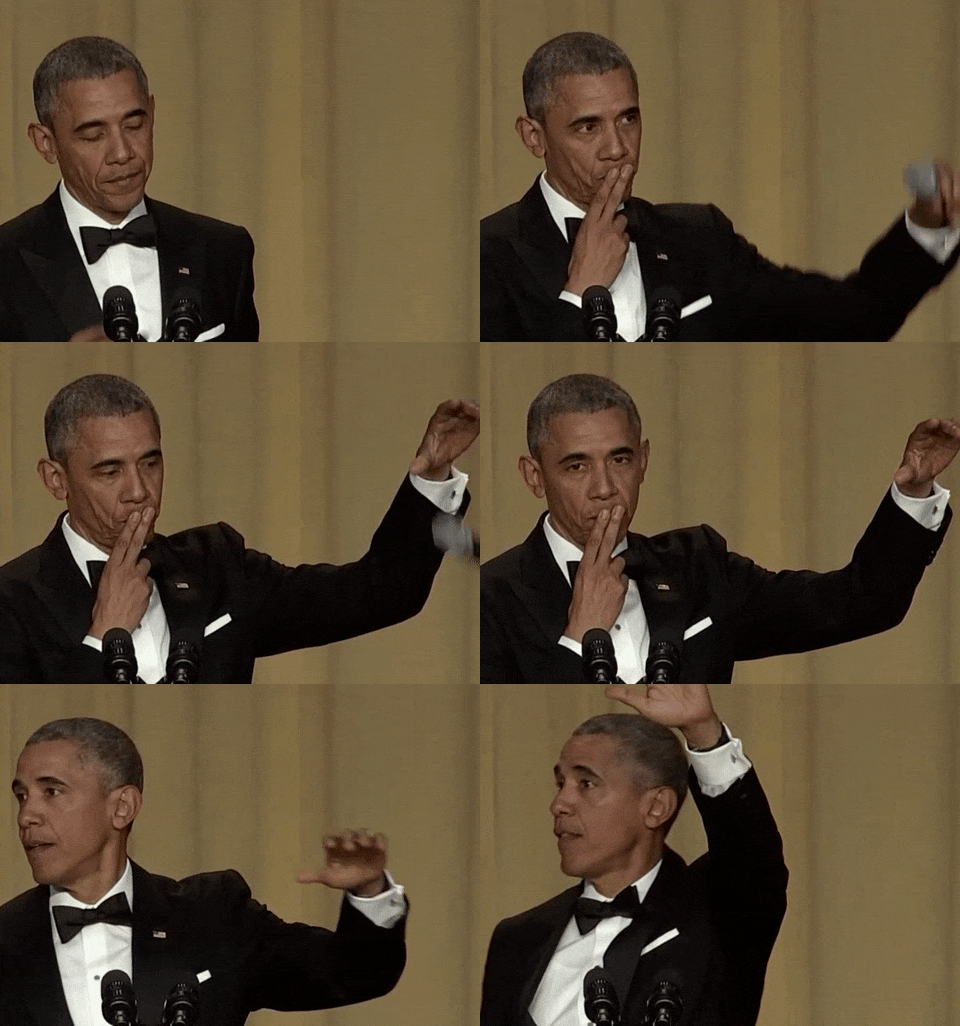
Since the start of the shelter in place order, I have noticed that my media consumption has increased substantially. Being far away from my friends and having the social distancing restrictions placed on me has cause me to gravitate more towards using social media to stay in contact with them. It was getting to a point where I was spending hours on Instagram and Snapchat, which made me arrive at the conclusion that the only way to limit my use was to go cold turkey. I have done this several of times before and it has worked very well for me. As someone who struggles with anxiety, I believe it to be helpful to eliminate certain distractions as much as possible so that I am more present in the task that I am trying to accomplish. Oftentimes when I’m at school, I find myself checking my phone frequently while I’m trying to study which ultimately causes me to retain less information. Not to mention, I find that social media leads me to experience cognitive overload since my brain doesn’t know what to do with all of the random images and captions that are impertinent to my daily life.
During the time that I deleted social media and stopped watching television, I filled my time with catching up on projects, homework, working-out, and reading. During the 3 days that I did the social media cleanse, I really enjoyed going on long walks around my neighborhood. Not having my phone with me made me more observant. I truly began to pay attention to each and every detail that went into the experience such as the chirping birds, the smell of the roses I passed, and the feeling of the sun on my face. For the first time in a while, I didn’t feel like I was in a hurry to get home. Heck, when I was home I even cleaned my room and put away the laundry that had been sitting in its basket for two weeks. I genuinely enjoyed everything that the days had to offer. I must say though, there were several moments where I didn’t know what to do or I felt as if I had already done every activity possible.
As for the challenges that I had, it was very strange to not listen to music. Anyone who knows me know that I love to listen to music at pretty much all times. I also like to watch a tv show in the morning and watch YouTube videos while I eat ranging from topics such as self-improvement to reaction/comedy videos. It was an interesting experience to just sit and eat with no entertainment in front of me. I learned to like it though, as its pretty peaceful. I must say, in the beginning it took every ounce of self-control in me to not redownload Instagram and to not watch TV with my family. At times it made me pretty anxious to feel so disconnected from everything. Especially since I am in the middle of transferring to another university, my primary form of communication with other transfer and incoming students is through social media. But this also made me remember/realize that the valuable friendships I made my freshman year were not based on how connected I was to the person through social media. All of these friendships were cultivated through intentionality rather than mere connections on social media. This is not to say that social media isn’t a great tool for us to connect with others, but rather that it must be used judiciously.
Now that I am three days into the cleanse, I feel really happy with how it went. I hope to continue to limit my use of my phone and laptop for entertainment purposes. Now that I have seen that I can go without that and greatly benefit from abstaining from overusing my devices, it is something that I hope to continue to carry out. It was pretty therapeutic to not have to not have to worry about responding back to every single text I and to have a legitimate excuse to ignore my notifications. I honestly made me feel more human and more in control of my life. Over the last several years I have developed such a reliance on technology, and I was essentially looking for an escape from this.
I absolutely think that everyone should do a phone or social media cleanse. I see my friends as glued to their phones as I am, which is honestly kind of sad. We are letting these little machines become a part of who we are, a part of our identity. I think that in order for us to have our priorities in check, we have to let go of the things that take up too much of our time without enriching our lives. I want there to be a movement of people saying that enough is enough and that we want to take back our lives from the cycle of social media and technology reliance. I know this may sound exaggerated, but I truly speak from experience and I know that many others feel the same way. The advantages of having the extensive amount of technology that we have are that we have access to endless information which can make us more intelligent and well-versed in more areas of study and because of this, we can make greater advances in the fields of science, technology, psychology, and much more. On the other hand, technology can also be a weapon and it can destroy our lives through our reliance and the time lost while using it, that could be more productive placed elsewhere.
I really enjoyed this assignment and hope to continue to minimize my use of technology and do another “cleanse” sometime soon. If anyone reads this, I hope it inspires them to go out “[In]to the Woods” as well!
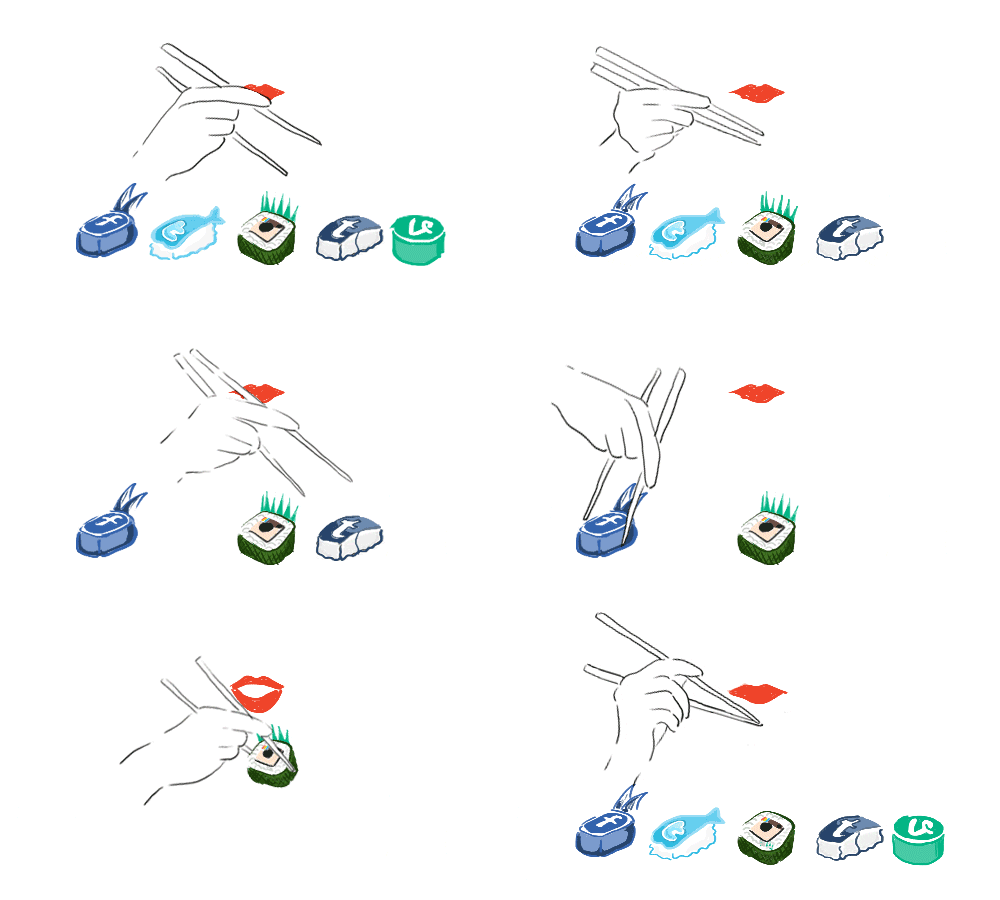
There are undeniable similarities between 1984’s telescreen and modern technology we see today. In modern society, people are eager to purchase the newest and most groundbreaking technology for a wide variety of reasons. Whether it be to fit in, communicate more effectively and remotely, or simply for entertainment, I believe that there is a certain level of denial involved in how we react to technology’s influence in our lives. The number of devices offered to us only continues to increase. I find it to be alarming that during a typical day at home, I will use an Apple Watch, iPad, iPhone, MacBook, smart oven, and smart speakers.
Most advanced machine learning technologies such as the mechanisms behind Siri and Alexa are designed to always listen. When I begin to think about this more, it makes me very uncomfortable. In essence, we have devices that are listening to us 24/7, 365 days a year and yet we rarely stop to think about how this could be a potential invasion of privacy. In 2019, Florida police were able to obtain Alexa voice recordings as part of a murder investigation. This surely answers the question of whether or not, this novel technology is able to store data. Of course, as a response, one could simply deactivate feedback services, but very few people choose to actually do so. Our society has gotten to the point where we value convenience and efficiency over a right as fundamental as privacy. While I don’t feel that I have much to hide, if I knew that devices were storing what I was saying and using the recordings for studies or to achieve other objectives it would make me even more paranoid than I already am. I admit, that I sometimes worry that if I am talking about a person, they may somehow hear it through my phone or my phone will accidentally call them. This is enough to launch me into full-blown panic. If I were actually being monitored, my speech would be severely limited. Everyone would have to worry about whether or not their words could be used against them.
The primary disadvantages of heavily integrated technology that invades the privacy of users are reliance and loss of control. As people become more and more reliant on technology for their day to day activities, they will not be able to go without it. Furthermore, if a person does not have a backup in the event of an emergency, they would be rendered unable to conduct business or other tasks that are regularly completed.
Personally, I believe privacy to be a right that should never be infringed on. Certainly, there are national security emergencies that warrant an invasion of privacy to protect U.S citizens. On the other hand, in the majority of instances, the government and other entities should respect the privacy of an individual. We should not constantly be monitored as it would not provide any additional benefit for American citizens. All in all, some surveillance will be necessary but it is imperative that there be a balance that allows for the respect of privacy while maintaining the guarantee of safety.

Dear Reader,
There’s a ten letter word that has claimed the lives of millions of people across the U.S, whether it be metaphorically or literally. It doesn’t discriminate against wealth, race, age, or many other factors. Different people experience it throughout their lifetime in various ways. People are afraid to talk about it because it can make them seem weak. It can be crippling and oftentimes go unnoticed. This phenomenon goes by the name of Depression.
Now what exactly is Depression? Depression is a mood disorder that causes a persistent feeling of sadness and loss of interest[RJ(1] . Aside from its scientific definition, it is far from simple with no universal cure. Some people will be successful in their attempts of progress, while others may be stuck in a perpetual cycle of hopelessness.
Depression can be extremely disruptive to one’s everyday life, which leads many people to seek help. Oftentimes, people will go to their doctor and inform them of the symptoms they are experiencing, only to be unjustifiably prescribed SSRIs (Selective Serotonin Reuptake Inhibitors) or other anti-depressants.
These medications work to combat a chemical imbalance in the brain, by blocking the reabsorption of serotonin into neurons. To a person who is greatly suffering from depression, lacking the desire to even engage in activities they once loved or even finding themselves unable to maintain their daily routine, turning to SSRIs may seem promising. It can bring hope to people who otherwise feel like they are experience a sadness so extreme that they cannot even contemplate a future without it.
For people with chemical imbalances in their brain, taking anti-depressants can allow for a transformative experience. Of course, those who take antidepressants are very strong and deserve to receive the relief they are longing for. The point I am precisely trying to explain is that for the cases in which a patient has depression stemming from other reasons, they should have the opportunities to seek relief in other ways.
So then what is the danger in prescribing anti-depressants to patients who have symptoms of depression? Unfortunately, if the consumption of SSRIs without the combination of therapies such as psychotherapy or Cognitive Behavioral Therapy (CBT), patients can be left even less capable than before in combatting depression. Irving Kirsch, a Director of the Placebo Studies program at Harvard’s Medical School states that,
“In an informational brochure issued to inform the public about depression, the US National Institute for Mental Health tells people that ‘depressive illnesses are disorders of the brain’ and adds that ‘important neurotransmitters – chemicals that brain cells use to communicate – appear to be out of balance’. This view is so widespread that it was even proffered by the editors of PLoS [Public Library of Science] Medicine in their summary that accompanied our article. ‘Depression,’ they wrote, ‘is a serious medical illness caused by imbalances in the brain chemicals that regulate mood’, and they went on to say that antidepressants are supposed to work by correcting these imbalances.
The editors wrote their comment on chemical imbalances as if it were an established fact, and this is also how it is presented by drug companies. Actually, it is not. Instead, even its proponents have to admit that it is a controversial hypothesis that has not yet been proven.”
This quote leads to the important questions of “Could Antidepressants be overprescribed? And if so, what are the consequences and why might they not work in the way that people expect them to?”
In This Could Be Why You’re Depressed or Anxious, a TED talk by Johann Hari, he explains his personal journey with antidepressants as he wonders why after taking them for years, he still dealt with profuse feelings of despondency. After years of no improvement, Hari began to conduct research by consulting psychiatrists and delving into countless scientific studies. Hari goes on to tell of how one of the leading doctors at the United Nations put out an official statement clarifying that it is necessarily to talk about the imbalances in the way we live, rather than chemical imbalances.
*While anti-depressants give real relief to some people, for others depression persists because this problem goes deeper than their biology. For this very reason, the solutions need to go much deeper as well.*
Personally, I have been prescribed antidepressants on several occasions. This has actually made me feel worse because it makes seems as if there’s no other option or that I am not capable of improving through other methods. I believe that there are many reasons behind/ for the depression that many of us experience. To simply be told that a drug can help or fix these problems is misleading.
Not to oversimplify a very complex phenomenon but I believe that the anti-depressant that we may need could be support from others and a feeling of belonging. We need people to show us that they won’t give up on us or judge us for the struggles we have with mental health.
We have to start teaching people that they have (more) control over their depression (than health professionals let off), not the other way around.
And I know it’s difficult, or it may even seem impossible to manage at times. The feelings of hopelessness can be all-consuming. I know there are days when you may not even be able to get out of bed. There are days when you might feel like you are a burden to everyone around you. You ask yourself, “why am I suffering so much?”
It is during these times that we have to give ourselves permission to feel. There are circumstances that warrant being sad, and at that sad for a long time. But we must also make active efforts to improve our daily habits, get to the root of our traumas, and pursue peace.
Because of the struggles I have experienced in mental health for the last seven years of my life I have been able to reach more people than I ever would have otherwise. What I have learned through my experiences with depression is that we are never too far gone, and there are people who are for us, even when we feel unlovable. These battles have taught me that there is hope for me just like there is hope for others dealing with similar problems.
There has to be an open-dialogue about the other seven causes of depression and what we can do as a society to help those in need of help. Instead of just rushing to give them medications, maybe we should sit and listen to them and make them feel heard. I hope to see a future where the US National Institute for Mental health can allocate as much money to rehabilitation and mental health programs for mental health as we do to research and improvement in anti-depressants.
To anyone reading this, I implore you to educate yourself regarding the causes and effects of depression. Realize that you must question the information that is given to you, even if it seems to come from a reputable source. With the information you learn you may be able to better understand those fighting mental illnesses. We need more people who are aware of mental illnesses so that we can ultimately work towards helping these people.
Finally, to those suffering from depression, I am for you. I want you to have access to the resources you deserve, so that you can get better. You are loved and you have so much to offer to society. You may struggle to see your purpose or how you can continue to live your life this way. I see you. Your struggles are valid. Remember that it’s ok to have bad days. It’s ok to feel like you have nothing left to give. I hope that you can surround yourself with people who encourage you and love you for who you are. You are not alone.

Bandwagon Effect
It has been over a month since the shelter-in-place order has been placed on the city of San Jose. Several consequences have come as a result of people being laid off, the inability to leave home, and a general decrease in moral. It has been so long since the shelter in place order has been placed, therefore society should be able to return to normalcy sooner rather than later. Several of my friends have dyed their hair pink and given themselves bangs, so it’s safe to say that the majority of people are going crazy. People are feeling more isolated than ever, making them more eager to go out. Additionally, the majority of people have been hanging out with their friends and disregarding social distancing, so what is the point in obeying the ordinance anyway? We should all be able to make our own decisions and not have our rights infringed on. It is fair for people to continue on with their normal lives as the economic has taken a large hit and needs to be boosted as soon as possible.
Slippery slope
If the shelter-in- place order is not lifted then even more people will lose their jobs, and if they lose their jobs they will have no source of income. Due to this decrease in income, they will not be able to provide for their families and we will see an irreparable economic crisis. Why aren’t our leaders taking action to prevent this? People may say that if the shelter in place order is lifted, we will see a substantial increase in deaths. Have people forgotten about the opioid crisis that has taken the lives of 70,000 people per year in the United States? Why aren’t as many people fearful of this or outraged? People are operating under nonsensical ideals, and its causing the country to fall apart. As Americans it is our duty to make sure that we do everything in our power to get the country back up and running.
Straw Man
If you do not support the lifting of the shelter-in-place order, you must not care very much about the jobs of the 20 million Americans that were lost. Of course, the rich are sitting in their mansions, nearly unaffected by what has been going on. They could care less about the poor people who are struggling to even scramble enough money for a couple of meals, let alone a few months. They have never thought about those who are less fortunate, so there would be no reason to start now. If they have so much money, why don’t they donate it to those who are in need right now? Whatever happened to looking out for each other? Just like most other viruses have come and gone, this one will as well. Let’s not forget about the liberals wanting to exercise as much control as possible over people. They will hold on to every ounce of power they can get, even if they are obtaining it by unethical means. All in all, it should be very clear that the order needs to be lifted, if not many unfavorable consequences will follow!
The Inescapable Cycle of Procrastination
In his TED talk, Inside the Mind of a Master Procrastinator, Tim Urban gives the audience insight into what being a fervent procrastinator entails, in a way that is relatable to people in all walks of life. As Urban jokes about his personal experience with procrastination, he employs a comedic and informal tone to establish commonality and relatability with his audience. Urban begins with examples of ways in which college students procrastinate, and concludes his talk with instances in which adults postpone working towards their short-term and long-term goals. This specifically pertains to Millenials and young adults who have recently entered the workforce and are continuing to justify the mindset of being pushing off tasks with nonexistent deadlines or simply not taking action to achieve their goals. The speaker’s talk proves to be extremely relevant in a time where people are struggling to find the motivation to take the first steps in breaking the vicious cycle of stalling action. With nearly 27 million views it is evident that this TED talk has captured a large audience. Urban’s intention of informing the audience of the adversity that comes as a result of a lack of action is conveyed through the use of ethos, symbolism, and pathos.
Within seconds of opening, Urban establishes credibility through his extensive use of personal examples. Just as some of the audience members may begin to think of times in which they have procrastinated, the speaker wins the competition by a mile. He begins with the process of writing his 90-page senior thesis, describing it as a frantic time where he knew that he would need to distribute his work efforts over the span of a year, rather than simply waiting until the last moment. In spite of this realization, Urban continued to put off this massive assignment, leaving only three days before the deadline to complete it. He then proceeds to show the audience a graph of how the distribution of work should look like in comparison to how it actually turned out, with a single sky-scraping bar at the end of the graph. Through the use of personal narratives to illustrate the degree to which he procrastinates, he appeals to ethos. While a person may not traditionally establish credibility by being a master procrastinator, in this case, Urban truly demonstrates his knowledge of this practice. In order to truly establish dependability, it is clear that he must create commonality between himself and the audience. To further add relatability, he recalls times where he was sucked into the black hole of the internet, as he “[read] the entire Wikipedia page of the Nancy Kerrigan and Tonya Harding scandal.” Additionally, he shares about the countless times where he is on Youtube and ends up watching interviews with Justin Bieber’s mother. All in all, he creates a light environment where the audience is able to connect with what he is saying while laughing at his hysterical anecdotes.
Amongst the most compelling strategies, Urban employs are symbolism and the personification of various components in the human mind. The audience believes that he is about to show them a scientific visual of the differences between the brain of a procrastinator versus that of a non-procrastinator. Ironically, he assigns characters to the decision making compartments circuits of our brain. He shows a very simple visual of a stick figure of the “rational decision-maker”, which is depicted as a content and level headed personality. Conversely, he also illustrates an elementary sketch of a monkey, that is labeled as the “instant gratification monkey.” The rational decision-maker alerts our brains and prompts us to do work in a timely manner. On the other hand, the instant gratification monkey lives entirely in the present moment and encourages us to give in to our current desires. The monkey does not possess the ability to think about the future, solely focusing on the present. Furthermore, it only wants to engage in activities that can be completed with ease and that are enjoyable. Urban goes on to explain the concept of the dark playground, which is where many procrastinators spend their time participating in leisurely activities they have not rightfully earned. Over-indulging in this leisure time inevitably leads to guilt and anxiety. Urban then poses a highly important question. What does it take for the monkey to complete difficult tasks? This is where the panic monster comes into the equation, being the only things that will get the monkey to where it needs to be. The panic monster remains dormant but is awoken anytime a person is faced with a close deadline or is at risk of danger or embarrassment.
Finally, Urban constructs a convincing argument by appealing to pathos. While procrastination is often joked about and not taken in a serious manner, the speaker clearly emphasizes how it can be a detriment to individuals and society at large. Countless people struggle with the consequences of postponing their plans, causing them to become frustrated and often hopeless. This long-term procrastination is “much less visible” and hardly talked about, yet it had the greatest consequences. Urban invokes an emotional response from the audience by creating a situation where he opens a vulnerable situation where people are able to see exactly what he is talking about in their own lives. As a result, this stirs up emotions of remorse and inadequacy, bringing awareness to the fact that a change must be made. He gives examples of non-deadline based procrastination such as at sounding the pursuit of a new career, a healthier lifestyle, or improving a relationship. Near the end of the presentation, Urban leaves the audience with a visual of “life calendar” which shows a box for each year of a 90-year life. This visual puts the short timeframe of our lives into perspective. To some, it may bring a newfound sense of inspiration to go out and work to achieve their goals, which is ultimately the nudge that Urban intended to give.
From the appeal to ethos to the unique use of symbolism, Urban is effective in bringing awareness to the problem of procrastination. He pushes the audience to ask themselves questions such as “Do I want to continue to live this way?” and “Is this lifestyle sustainable or even beneficial to me?” We may laugh at the silly examples that Urban makes but ultimately, it is evident that his anecdotes are meant to give the audience an epiphany. Our days on this Earth are limited, and we must treat them as such by challenging our inner instant gratification and pursuing our passions.

Growing up, most of my writing took place in a small, pink and blue Hello Kitty journal. I look back at the silly things that I wrote with a smile on my face, as I realize how much my goals and opinions have changed over the years. When I would spend time with my Mom in her room, I noticed that she kept a journal. While I would never read it (since I am not a snoop), I was quite intrigued as to what I might find there. I presume she wrote most of her thoughts, what she was struggling with, and what brought her joy. Naturally, I wanted to emulate what she was doing. So I did! I began to write in my journal daily as it was a cathartic and rewarding experience to me. I believe that part of the reason why I enjoy writing is because growing up I didn’t feel the pressure to write a masterpiece. I was just being myself and letting my personality speak through my intriguing thoughts on paper.
In high school, I believe that I wrote the way I thought my teachers wanted me to. Instead of having a unique voice, I would fill my essays with fancy words and analysis that would ensure I would get an A. Looking back, I can clearly understand why I did that, yet I regret not allowing my originality to infiltrate my essay. I dreaded writing essays and research projects, especially. I would frequently procrastinate and depend on the time constraint to get my creative juices flowing. Moving forward onto my freshman year of college, I would read other people’s essays that seemed so much more original than mine. I would wonder why I was never fully satisfied with my work. I was afraid to stumble. I thought that if I tried to voice my true tone that it wouldn’t be good enough. So, I stuck with what was safe, and wondered why I continued to doubt my work.
While the rigidity of writing in high school made me skeptical to fully voice my opinions, my mother’s writing inspired me. A moment that particularly shaped my view of writing was when I came across one of my mother’s Christmas newsletter from 2004. In the letter, she described what was going on in each of her kids’ lives and how proud and blessed she felt. She emphasized how pleased she was with our visit to Ecuador to visit the grandparents. As a young mother with three kids, I can’t imagine how much of a challenge that must have been. From the time difference, to the distinct culture, my mom was very happy with how much Ecuador felt like home to the rest of her family. Upon reading the final words of the letter, I was brought to tears. I quickly came to the realization, that someone other than a professional author, who learned English as a second language could impact a person to such a great extent through their words. The letter had the power of invoking feelings of harmony and an appreciation for my family. In the last year I have learned that writing does in fact serve a purpose, and while each writer may have a different purpose in mind, they share that goal. It has certainly been interesting to see the progression of my writing and how it reflects my outlook on life during that point in time. I would certainly say that I am hopeful to embrace writing with an open heart in the future, because of this experience.
Friend
Oh boy, buckle up your seatbelt because this is going to be a crazy ride (pun intended). It all started second semester of freshman year, after I had gone home for the weekend. I didn’t want to take an Uber from the airport back to school at night so I decided to ask my friend if he could pick me up from the airport. The only problem was that he didn’t have a car, so I let him borrow my keys. It was all fun and games until I told him I didn’t need him to pick me up anymore. Guess what he decided to do? He kept my keys for 2 months and DROVE my car without my permission. One time I was walking back from class and I saw him pull out of the parking lot with my car. You wouldn’t believe how confused and upset I was. I think the worst part of the whole situation was that he wouldn’t give them back to me. Who does that?
Parents
I have something to tell you both. Before you say anything I need you to understand that I had no other options. I decided to ask *Marcus to pick me up from the airport. I was willing to do anything as long as it saved me from getting picked up by a random person. Do you remember the time where the Uber driver offered me weed? Would you rather have had that happen again? I know he isn’t on the insurance and I was really reckless to have let someone else drive my car. I promise that I won’t ever let it happen again.
*Name was changed
Professor
There are times when you sense how something will turn out. However, in this situation, I certainly could not have foreseen the repercussions of my decision. About a year ago, I asked my friend to pick me up from the airport using my car. I trusted that he would be careful and considerate, yet I was sadly mistaken. Shortly after he decided to take my car out without my permission. Oddly enough, he would flaunt the fact that he still had my keys. I learned a lot through this experience, primarily to set proper boundaries with my friends. I also learned that while being assertive is difficult, it is necessary in some instances.
Have a WordPress.com account? Log in now.


